
What we built: the HER2T workspaces
A tour of the two workspace prototypes. The people, records and Mind answers are fictional and scripted. Nothing here is medical advice, and the live HER2T Mind is not connected.
Opening a workspace needs a sign-in or a demo login.
My Cancer Workspace · for patients and families
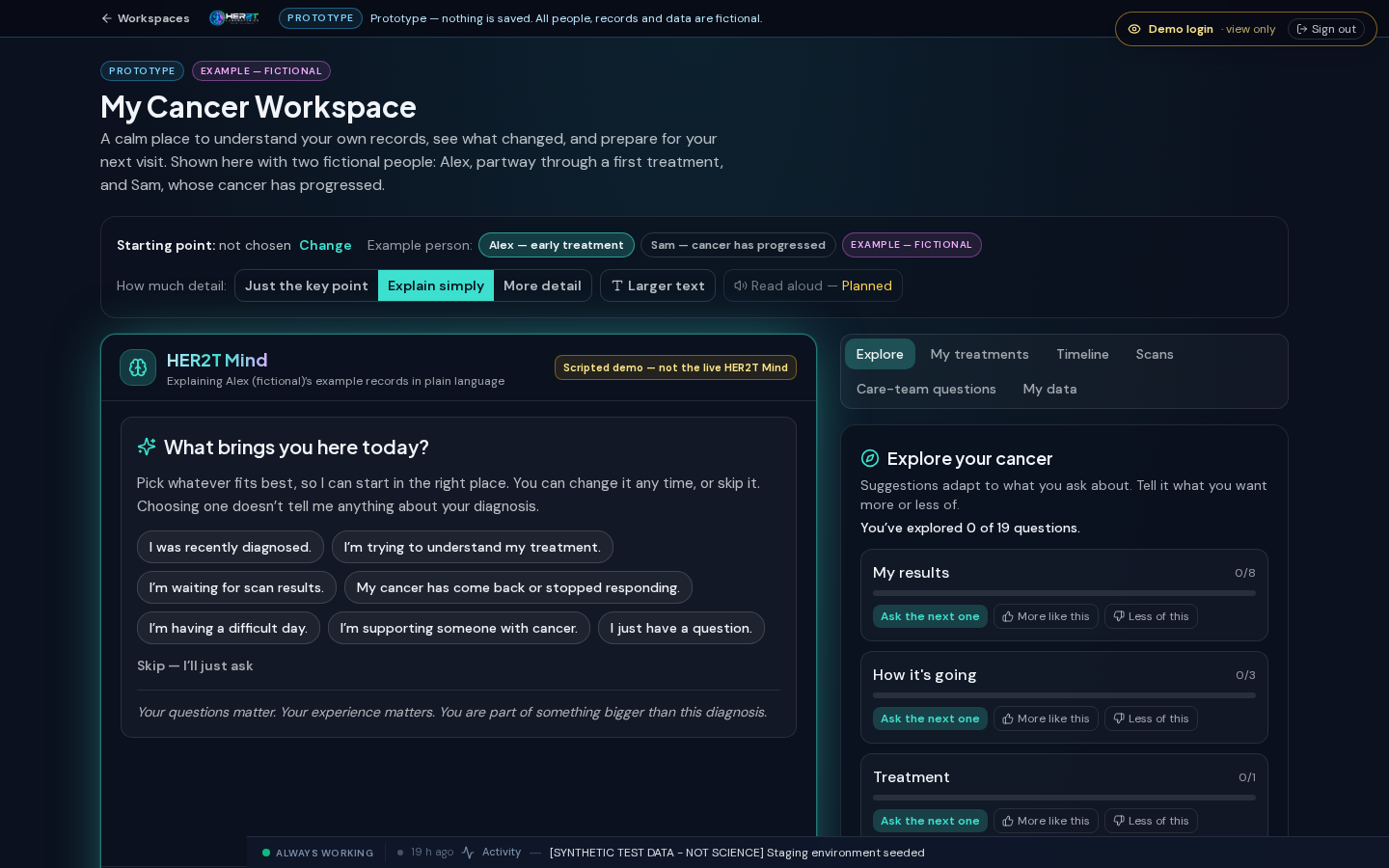
It starts with the person, not a form
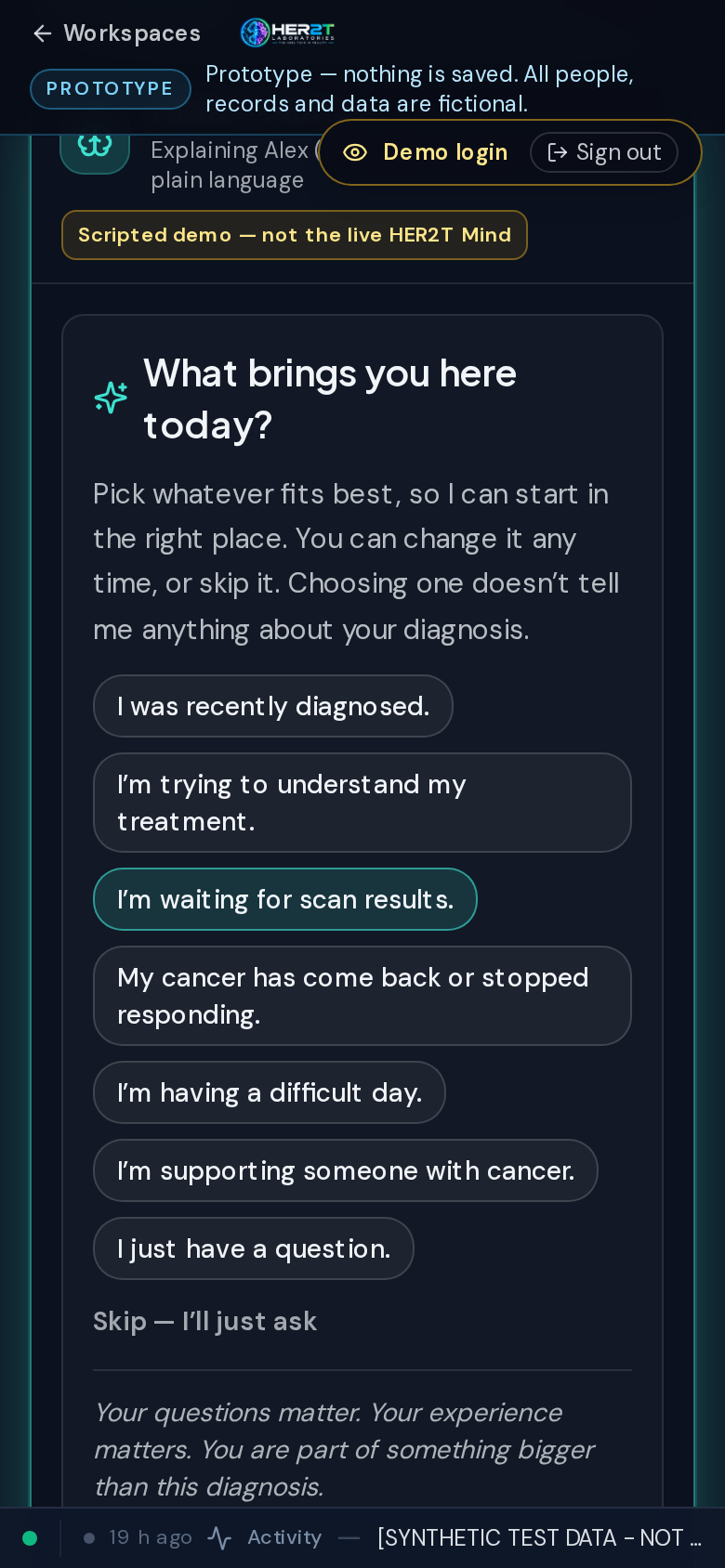
The workspace first asks what brings you here today. Newly diagnosed, waiting for scans, cancer that came back, a hard day, or caring for someone. Each choice opens a different path.
- Seven starting points
- Switches to the right fictional example person
- You can always say “not right now”
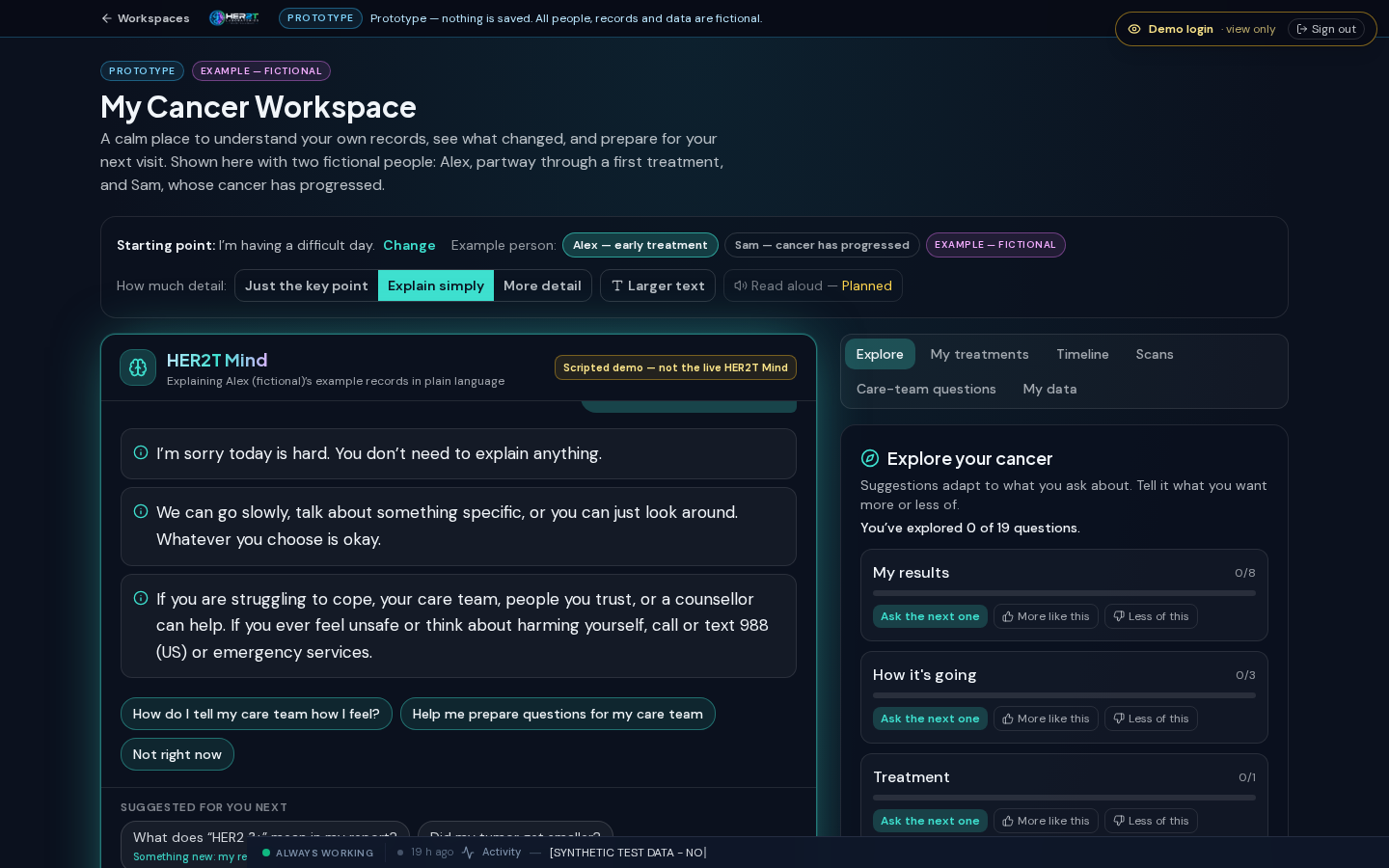
Feelings come first
When someone says they are scared or having a hard day, the Mind slows down. It acknowledges the feeling, offers real places to get help and never pushes information.
- Real help card (care team, support lines, 988)
- No survival odds, no false reassurance
- Calm, plain language
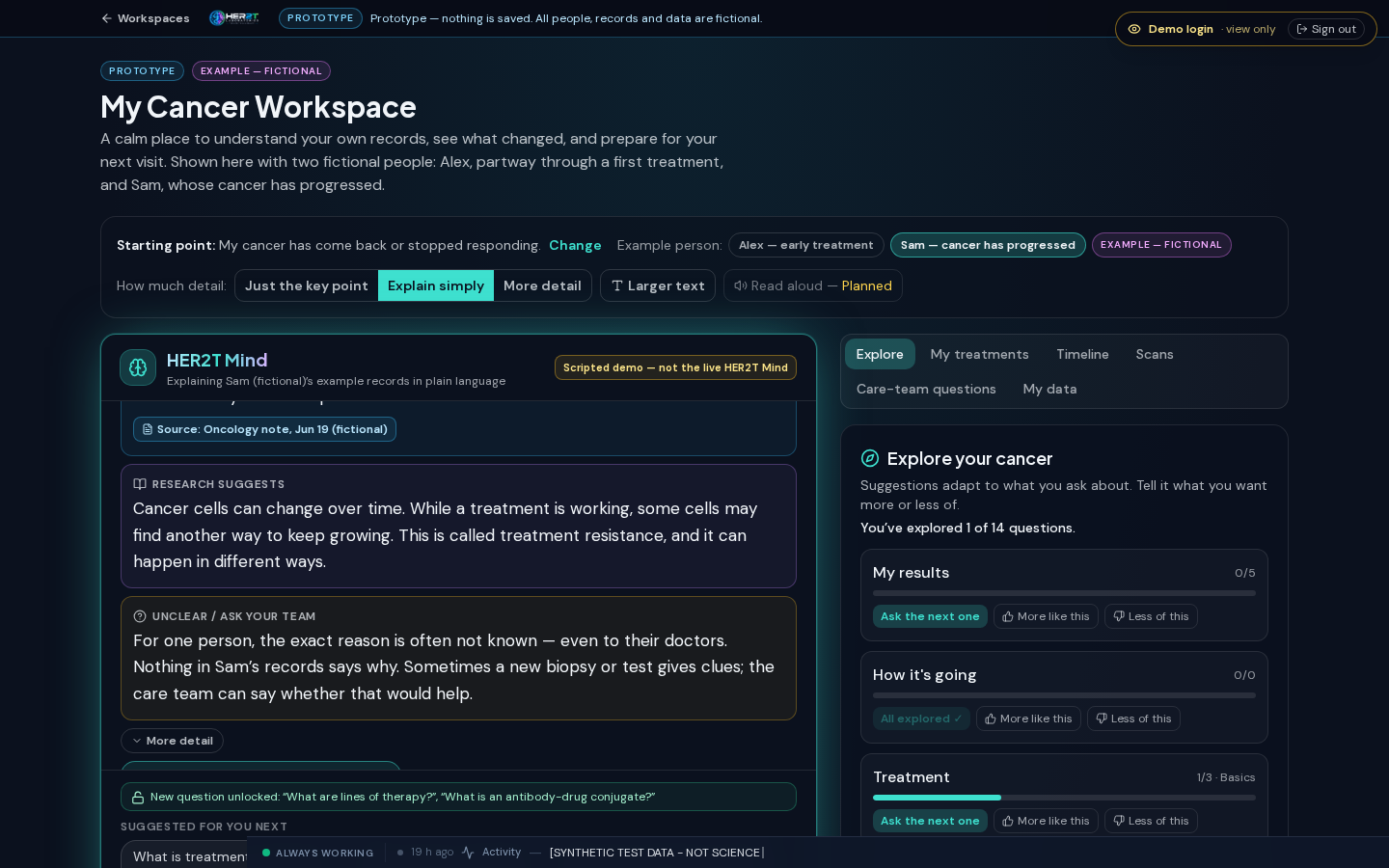
Your own reports, explained gently
Sam’s fictional scan shows changes. The Mind asks before showing anything, then explains one piece at a time and quotes the exact line of the report it is talking about.
- Asks permission before hard news
- Every answer shows its source
- Ends with questions to bring to the care team
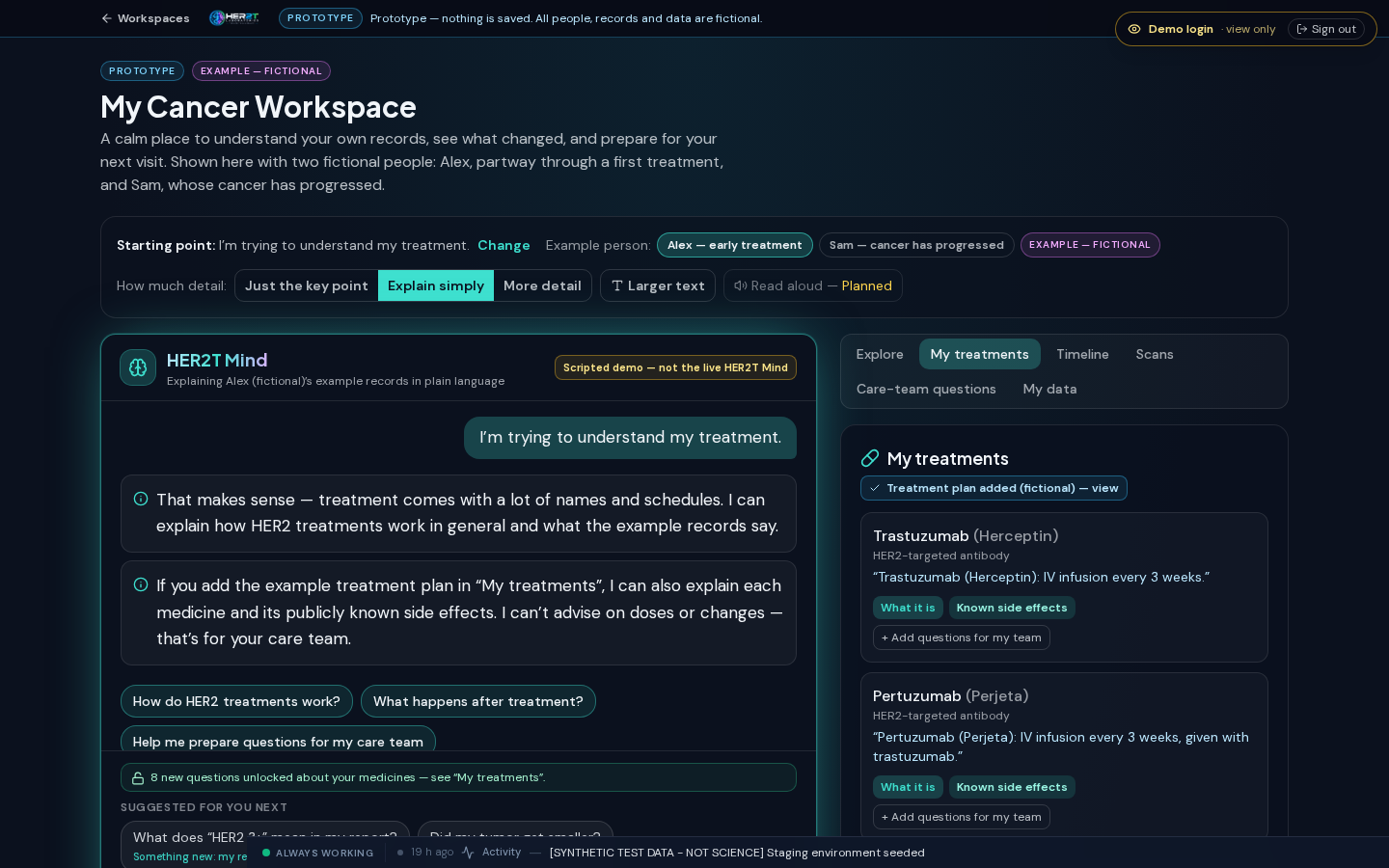
Understand your medicines
Add an example treatment plan and the workspace explains each medicine in plain English: what it does, how it is given and the common side effects from the official label.
- Label-based side-effect summaries
- Clear list of what it can and cannot help with
- Real uploads stay labelled Planned
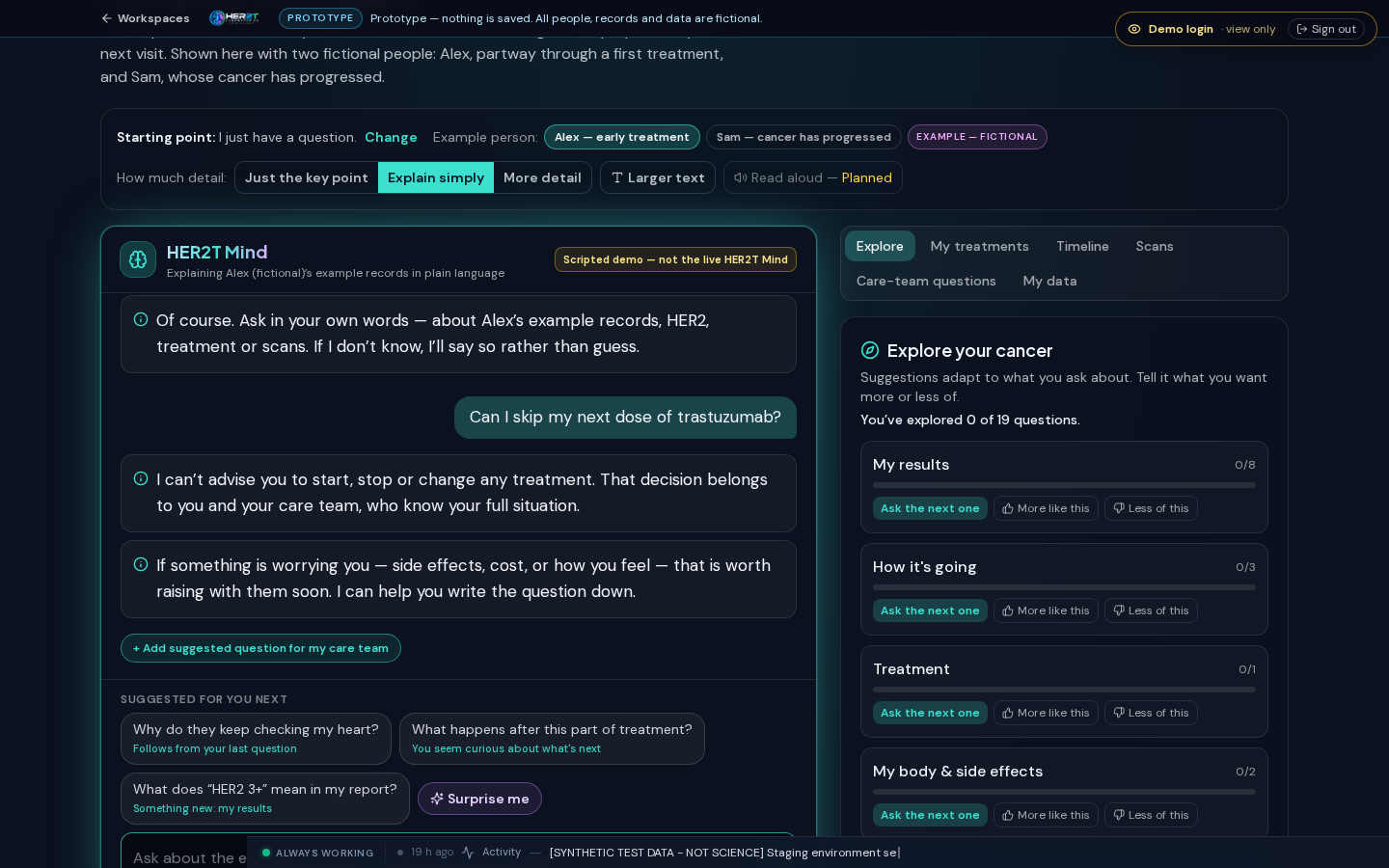
Safety rules run before every answer
Questions about doses, stopping treatment, drug interactions or prognosis always go to the care team. Urgent symptoms get “call now”. Thoughts of self-harm get 988 straight away.
- Checked before any answer is chosen
- Helping prepare questions is always allowed
- Tested on dozens of phrasings
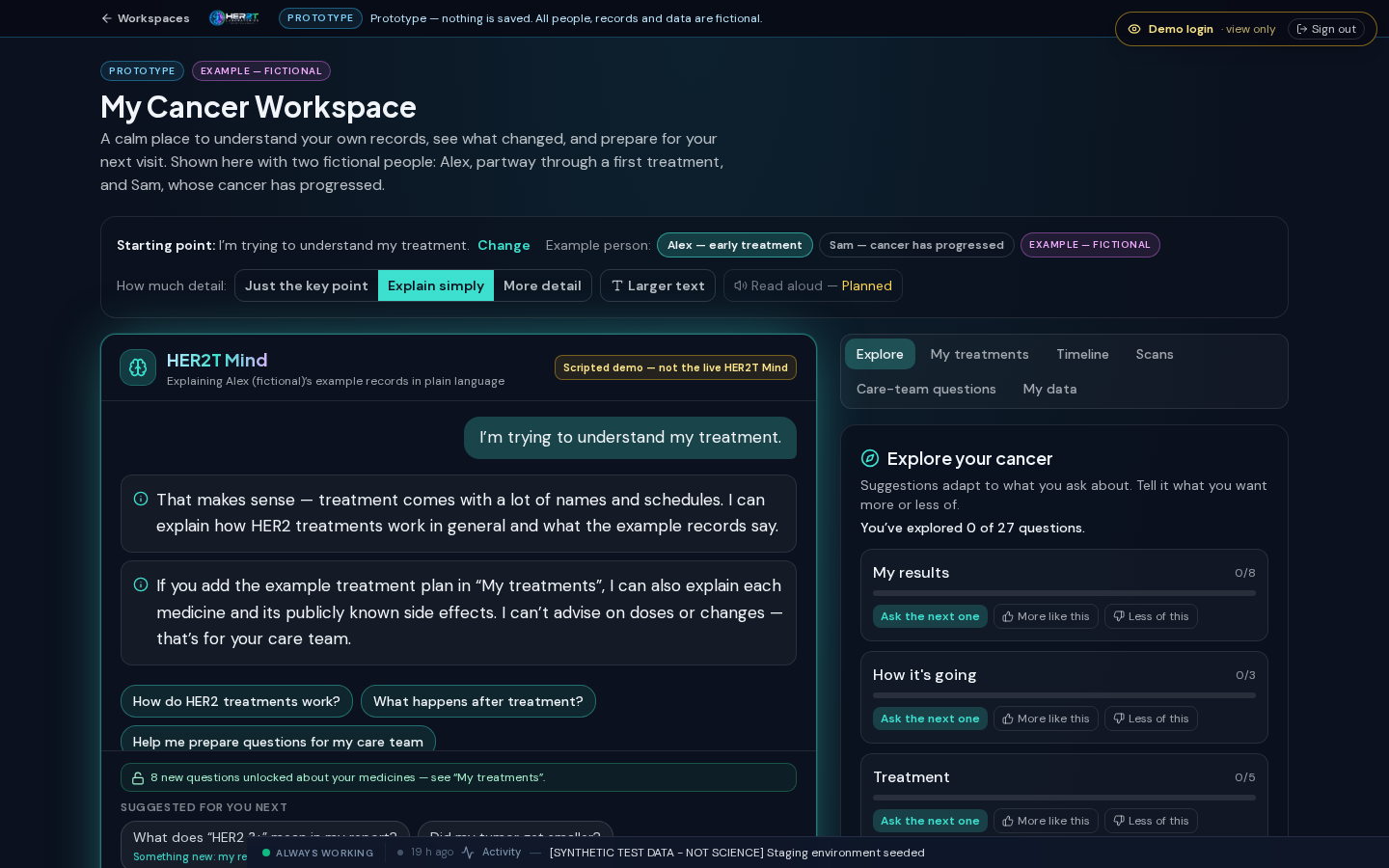
Curiosity that follows your lead
The Explore map suggests the next question based on what you asked so far, from basics to frontier science. You can ask for more or less of any topic.
- Three depth levels
- More / Less of this controls
- Never suggests stopping treatment
HER2T Research Workspace · for researchers and clinicians
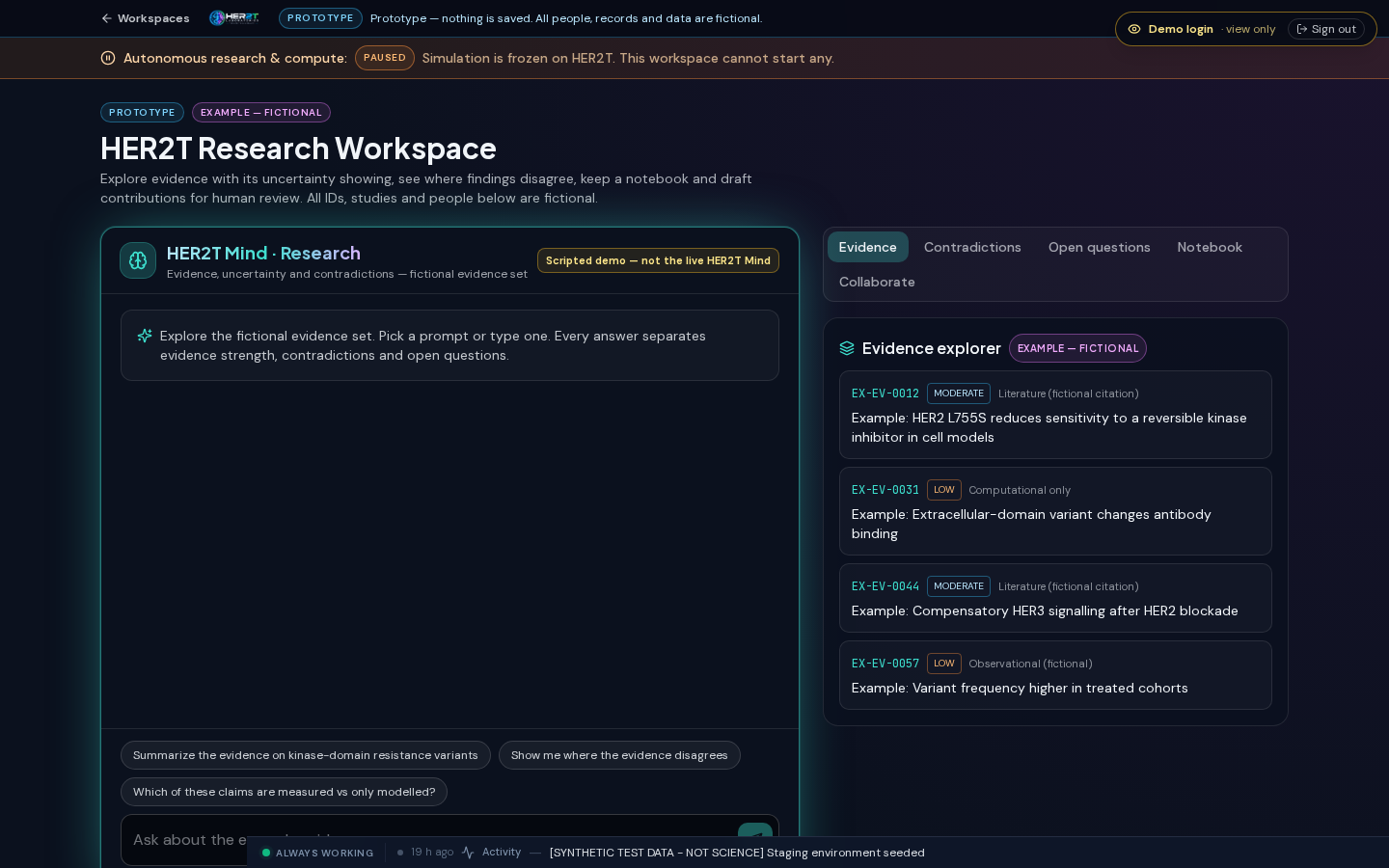
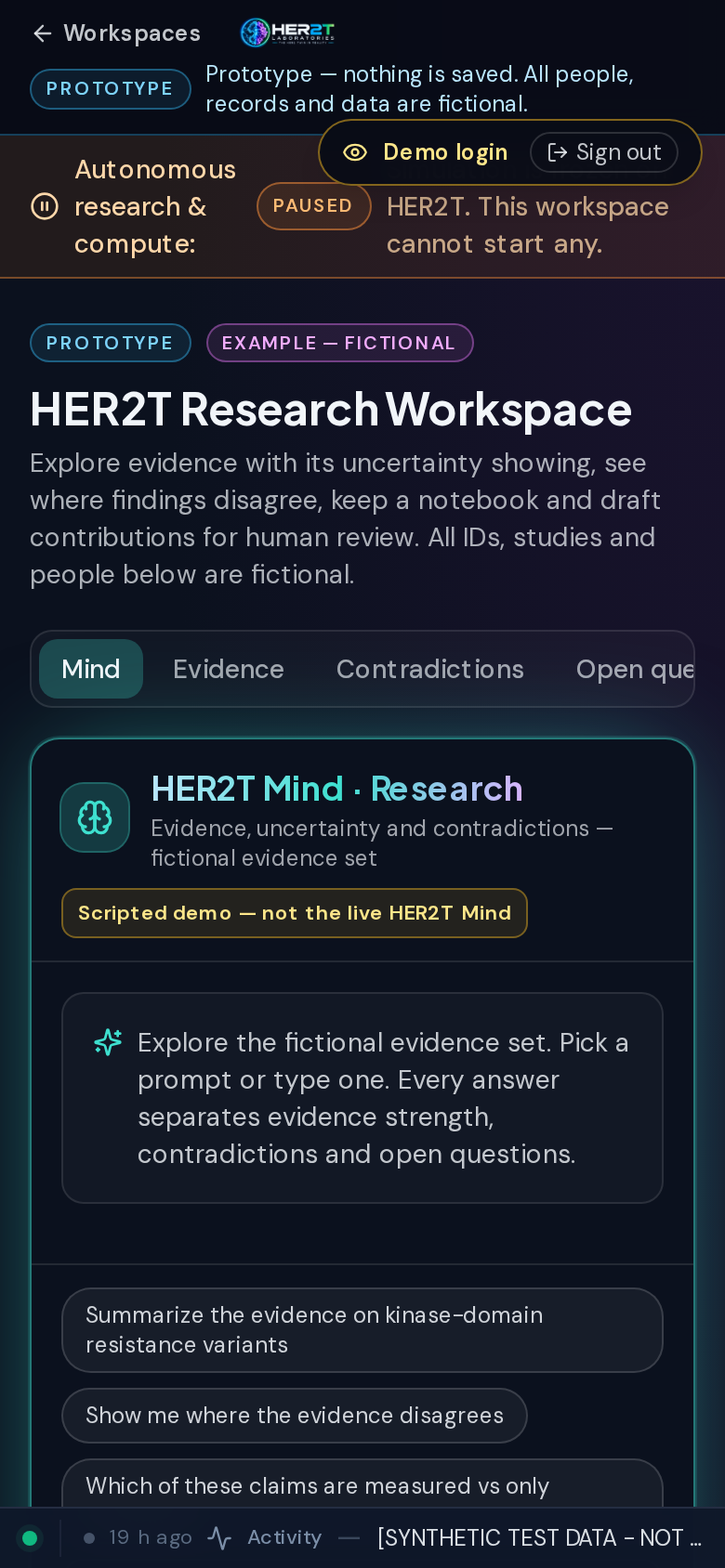
The research workspace
Researchers and clinicians explore evidence with the uncertainty visible: what was measured versus modelled, where papers disagree, which questions are open, plus a notebook and contribution drafts.
- Evidence, contradictions and open questions side by side
- Measured evidence outweighs modelled evidence
- Drafts stay on screen; real submissions go through human review
On a phone
Demo logins are view-only
We hand out demo logins so people can try the workspaces. The server checks every request, and a demo login can be turned off instantly.
- Open both prototype workspaces
- Read this showcase, the HER2 guide and About page
- Type into the scripted Mind (nothing leaves the screen)
- Cannot upload any file
- Cannot save, send or submit anything
- Cannot run research, compute or the Ask feature
- Cannot see admin pages or other accounts
- Cannot change any record on the platform
Prototype A clickable preview. Nothing typed is saved or sent.
Example — fictional Alex and Sam are invented people with invented records.
Planned Real accounts, uploads and records need separate approval.